

How To Solder Circuit Board Repair
How to Repair Antminer S17+ Hash Board?
Antminer S17+ Hash Board Repair Guide
Date of Version: 2019-eleven-25
File category: Maintenance program
Contents of this manual: referring to how to troubleshoot the S17+ hash board and how to use hash board tester to accurately locate information technology.
※ The copyright of this article belongs to Bitmaintech Pte. Ltd. (Bitmain). The article shall solely be reprinted, extracted or used in whatever other means with the permission of the copyright owner. Please contact Bitmain official client service if at that place is any need of reprinting or quoting.
I. Maintenance Platform / Tool Training
one. Platform requirements: rubber sheet repair workbench (workbench needs to exist grounded), anti-static wrist strap and grounding.
2. Constant temperature soldering iron (350–360℃), the head of tip soldering fe is used to solder minor patches such every bit chip resistors and capacitors, etc.; heat gun, BGA rework station for chip / BGA disassembly and soldering; multimeter, soldering steel pin and compress tubing for piece of cake measurement (Fluke 15b+ recommended); oscilloscope (Agilent recommended)
3. Testing tool requirements: APW9 + power supply and power patch cord for power supply of hash board; 1040 S17+ control board, hash board tester fixture.
4. Requirements for maintenance auxiliary materials / tool: depression-temperature solder paste Blastoff OM550, flux, water for cleaning panel and anhydrous alcohol; water for cleaning panel is used to make clean up soldering residues after repair; thermal conductive paste is used to apply on chips / estrus sinks after maintenance (some models require thermal conductive paste); tin-planting steel mesh, ball-planting steel mesh, solder wire, solder ball (ball bore is recommended to exist 0.4mm); when replacing a new chip, y'all need to found tin on bit pivot and the BSM surface before soldering them to the hash lath.
5. Demand for common maintenance spare materials: 0402 resistance (0R, 33R, 1K, 4.7K,); 0201 resistance (0R), 0402 capacitor (0.1uf, 1uf)
II. Functioning Requirements
1. Maintenance personnel must have sure electronic noesis, more than one year of maintenance feel, and be proficient in BGA / QFN / LGA package soldering technology.
2. After repairing, the hash board must be tested to be OK for more than twice, otherwise, it shall be rejected.
three. Please pay attention to the operation method when replacing the flake. There should be no obvious deformation of the PCB board later replacing any accessories. Cheque whether at that place are any open or short circuits, or missing parts in the replacement parts and the environs.
4. Check the tools, confirm whether the test fixtures can piece of work normally, determine the test software parameters for the maintenance station, and version of examination fixtures, etc.
v. After passing the repair and replacement bit test, yous need to check the full chip before performing the functional test. The functional exam shall ensure that the double-sided heat sinks are soldered OK and the cooling fan is at total speed. When using the chassis cooling function, y'all must put 3 hash boards at the same time to form air duct. The single-sided examination of product must also ensure the formation of air ducts (important).
6. When measuring the bespeak, two fans are used to misemploy heat as aid mensurate, and the fans maintain full speed (Recommended using a laser tachometer to test the fan speed).
7. For the front and back of the hash board, the steel windshield is nether 21V voltage. During the measurement and maintenance, delight keep the maintenance table clean and insulated to avoid short circuit during the maintenance.

8. When replacing a new chip, apply solder paste on the pins and the BSM surface to ensure that the fleck is pre-tinned earlier soldering to PCBA for maintenance.
nine. Fixtures at the maintenance end prefer Repair_Mode style and config configuration files tested in not-scanning manner. Subsequently passing the test, the production finish starts the production line from test piece; the subsequently-sale end is normally installed and anile (installed at the same level). The examination configuration file can be obtained from TE.
3. Production of Hash board Tester and Precautions
The supporting clamps of hash board tester should run into the requirements for heat dissipation of the hashboard and facilitate the measurement of signals.
ane. Calibrate the hashboard tester.
2. Use the test fixture SD card wink program to update the control board FPGA. After decompression, re-create to the SD menu and insert the card into the fixture menu slot. Ability on for about 1 infinitesimal and wait for the control board indicator to flash for three times, then complete the update.
 Effigy 3-one
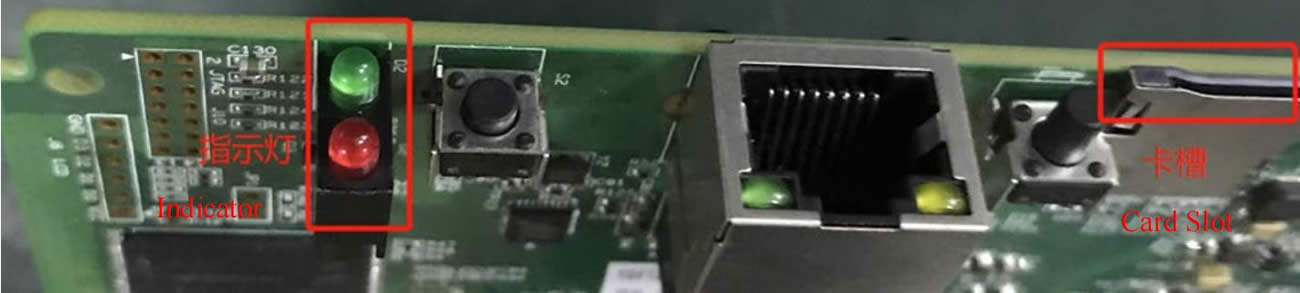
Effigy 3-2
3. The examination SD bill of fare will be produced co-ordinate to the requirements. The unmarried-sided estrus sink uses the file before brushing to brand the SD card; the double-sided heat sink uses the file after brushing to brand the SD card.

Figure three-3
four. The double-sided exam at the production end requires a code scanning gun and serial port tools. Delight refer to the test process file for details.
5. The after-sale end and outsourced maintenance side does non need to utilize the code scanning method (hash board tester SD card configuration file needs to be changed, the demand can be submitted to TE and TE volition test the config configuration file for hash board tester).
IV. Principle Overview
one. S17+ hash board working structure:
The hash board is composed of 65 BM1397 chips, which are divided into 13 groups, each group is composed of 5 ICs; the working voltage of the BM1397 bit used by the S17 hash board is 1.5V; the terminal 24.5V output by the boost circuit U6 powers the LDO, LDO outputs 1.8V, the terminal tertiary and tertiary groups are powered by 24.5V DCDC to output 1.8V, and the other groups are powered past 21V divided voltage to provide one.8V through DCDC. All 0.8V is provided past the one.8V of this domain via the LDO output, every bit shown in Figure 4-1.
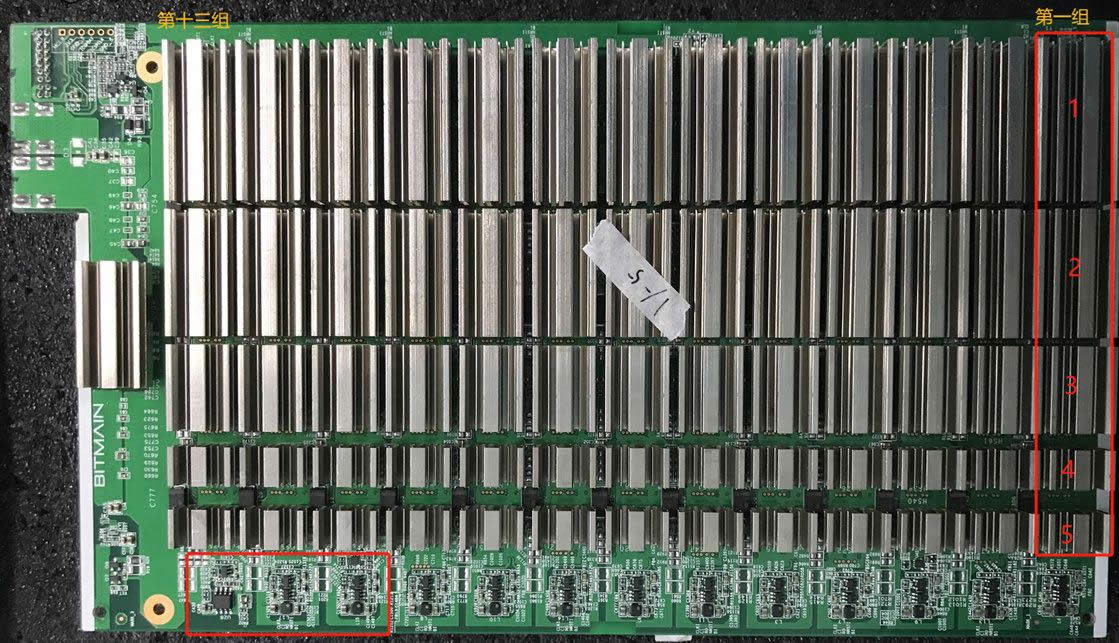
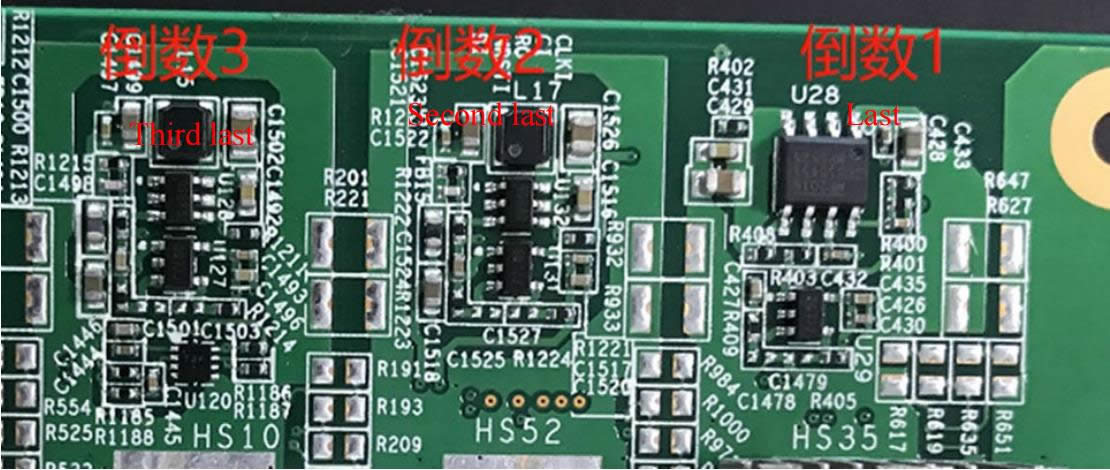
Effigy 4-1
two. S17 hash board heave circuit:
The boost is from 21V to 24.5V powered by the power supply, as shown in Figure 4-2.
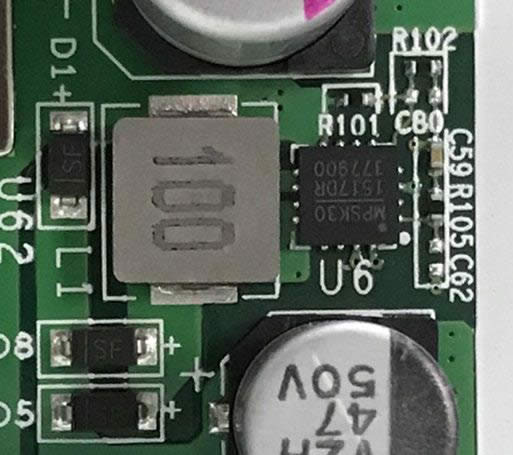
Effigy 4-2
3. S17 scrap indicate management:
3.1 CLK (XIN) signal direction: It is generated by Y1 25M crystal oscillator and transmitted from scrap 01 to flake 65. During operation, the voltage is 1.45-1.65V(oscilloscope). Voltage measured by multimeter is virtually 0.7-0.9V.
3.2. TX (CI, CO) bespeak management: input from pin 7 (3.3V) of IO port, transferred to IC U2 through level conversion, then transmitted from chip 01 to scrap 65; the voltage is 0V when the IO line is not inserted, and the voltage during functioning is 1.8V.
3.3 RX (RI, RO) signal direction: from chip 65 to chip 01, return to pivot 8 of the signal cable terminal via U1 and return to the command board; the voltage is 0.3V when the IO line is not inserted, and the voltage during operation is 1.8V.
3.4 BO (BI, BO) signal direction: from scrap 01 to flake 65; voltage measured using multimeter is 0V.
3.5 RST signal direction: input from pin 3 of the IO port, and and then transmitted from bit 01 to chip 65; 0V without IO point or in standby and ane.8V in performance.
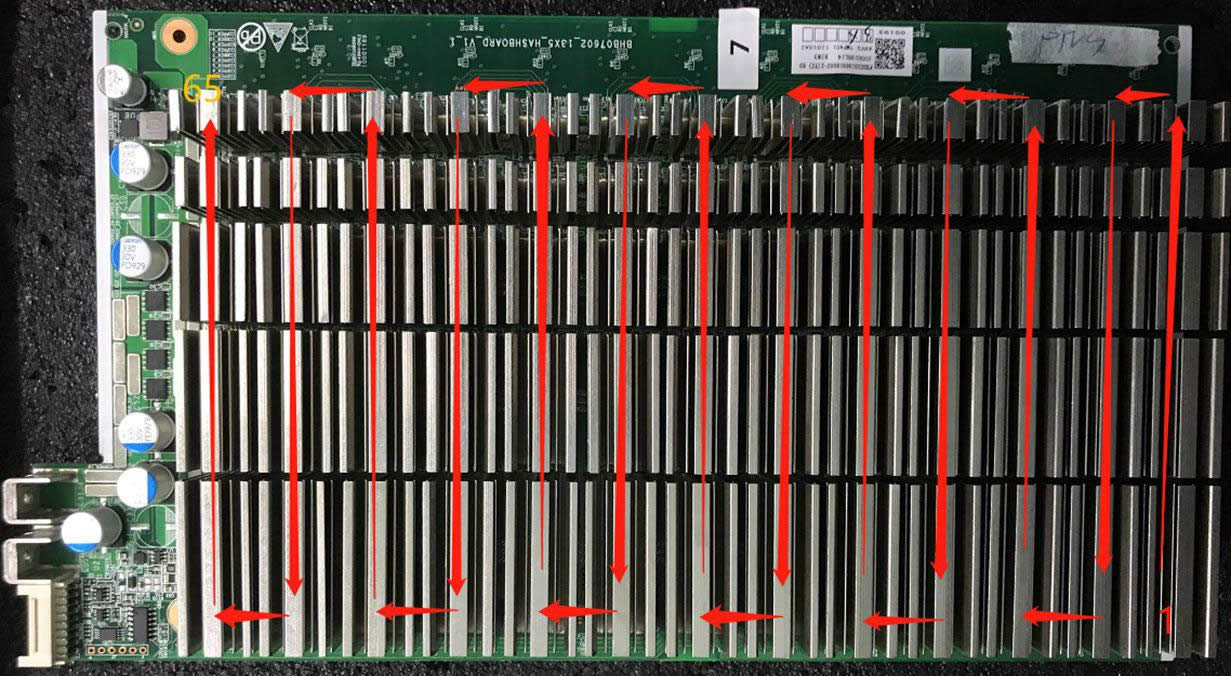
Figure four-three
4. Overall architecture:
The miner is mainly composed of iii hash boards, 1 command board, APW9 + power supply, and four cooling fans, as shown in Effigy 4-iv.
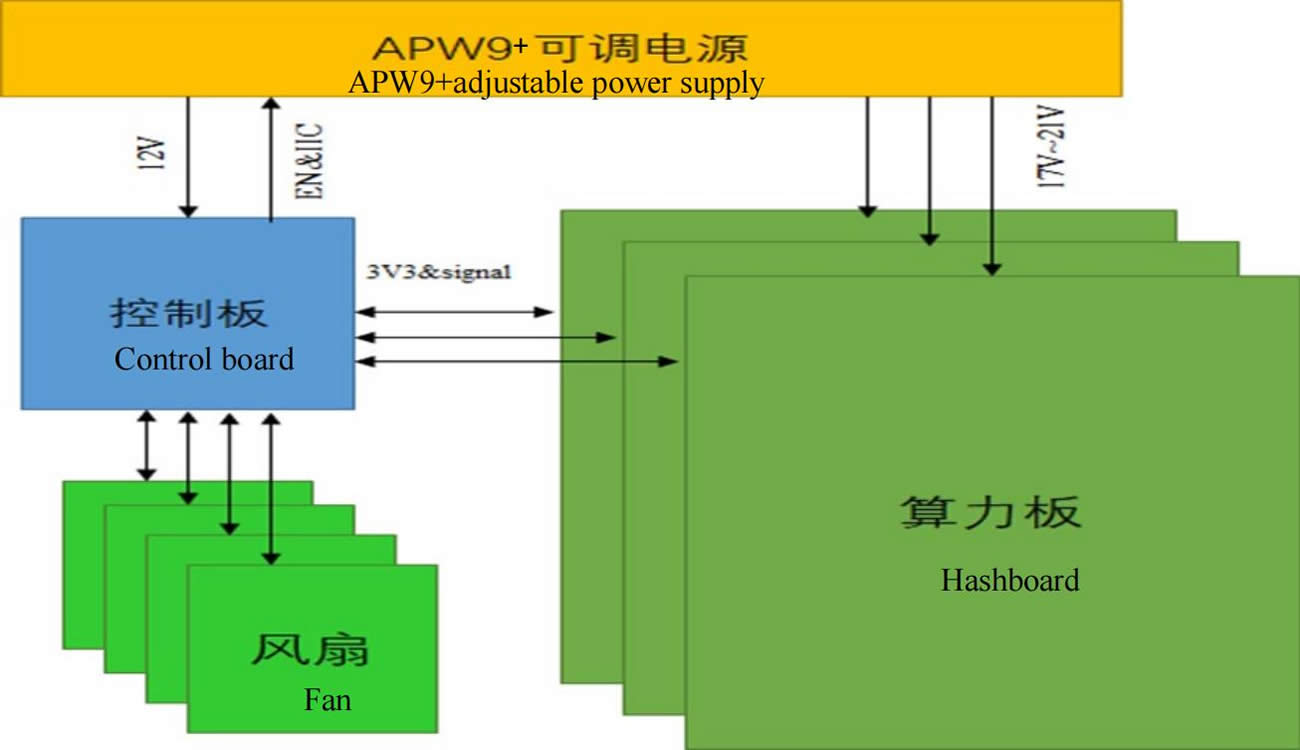
Figure 4-4
5. Common Poor Phenomenon of Hash lath and Troubleshooting Procedure
Phenomenon: during unmarried board test, fleck is detected to be 0 (PT1 / PT2 station type)
Stride ane: check the power output first. Please check the circled part in Figure 5-1.
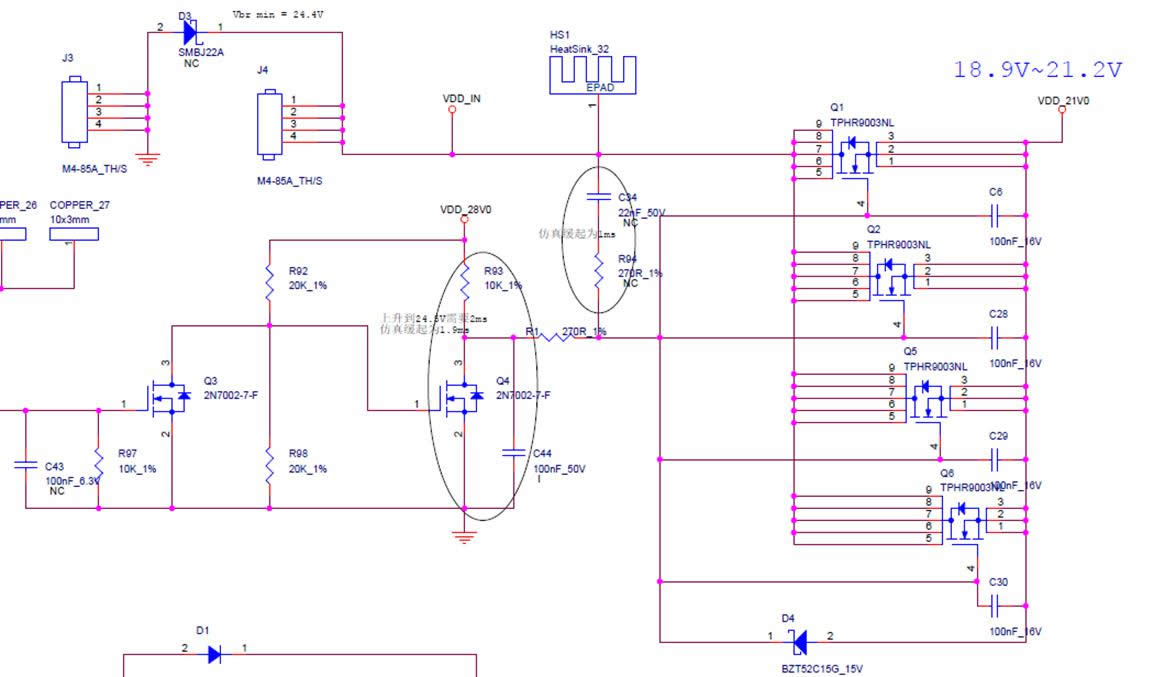
Figure 5-i
Step ii: check the voltage domain voltage output
The voltage in each voltage domain is about one.6V. Generally, there is a domain voltage when ability is supplied at 21V. Information technology is preferred to measure the output of the power supply final of the hash lath and make up one's mind whether the MOS is shorted (measure the resistance between pins one, 4, and 8). If there is power supply at 21V but no domain voltage, go along to check downward.
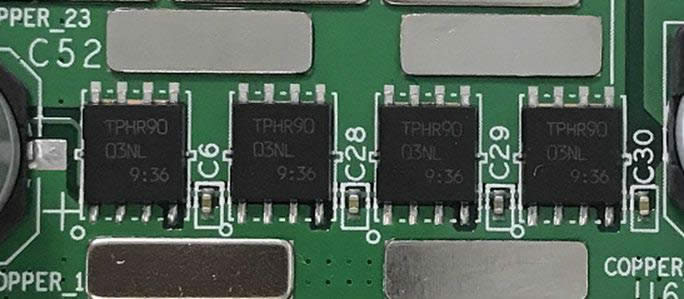
Figure v-2
Footstep iii: check the Picture show circuit
Mensurate whether the second pin of U3 has an output, the voltage is almost 3.2V; if yes, please continue to troubleshoot, if there is no 3.3V, please bank check that the connectedness condition of the fixture cable and the hash lath is OK, and re-program the Picture show.
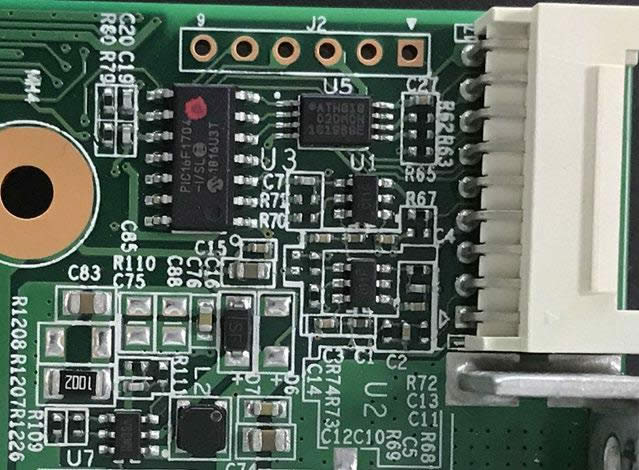
Effigy 5-3
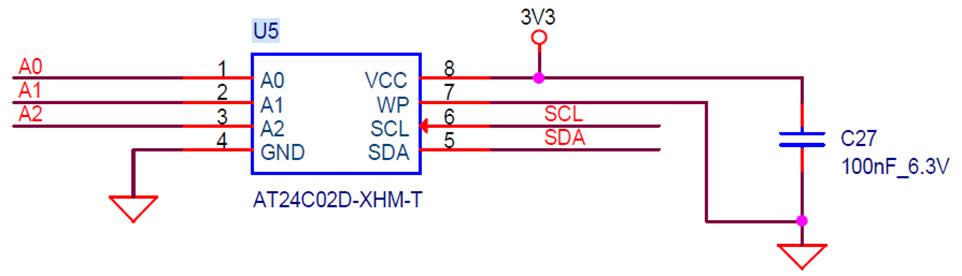
Figure 5-4
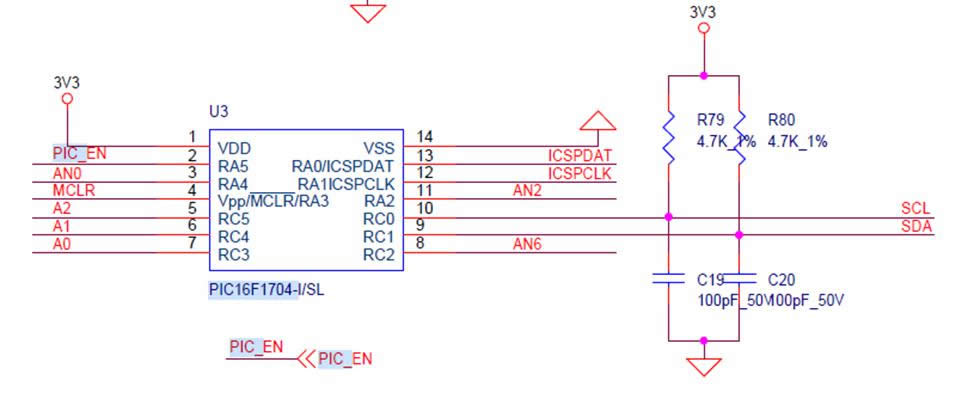
Effigy 5-5
PIC programming procedure:
ane. Plan the PIC program of the arithmetic lath.
Procedure: 20190908-PIC1704-BHB07602-0x88.hex
Download the programming tool: PICkit3; pin 1 of the PICkit3 cable corresponds to pivot 1 of J3 on the PCB, and pins one, 2, three, 4, 5, and 6 need to be continued.
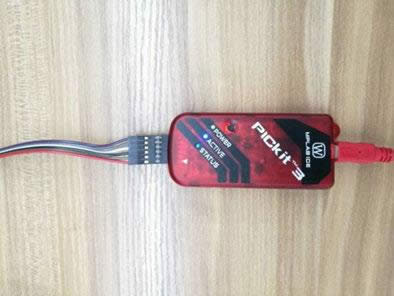
Effigy 5-half-dozen
2. Programming software:
Open up MPLAB IPE, select device: PIC16F1704, click power to select the ability supply method, and then click operate. First step: select the file to find the .HEX file to exist programmed. Second step: click connect to connect normally. 3rd step: click the program button, and so click verify subsequently finish. Prompt will be sent to prove that the programming is successful.
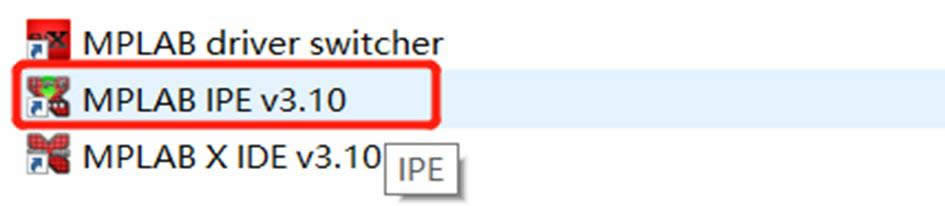
Figure v-7
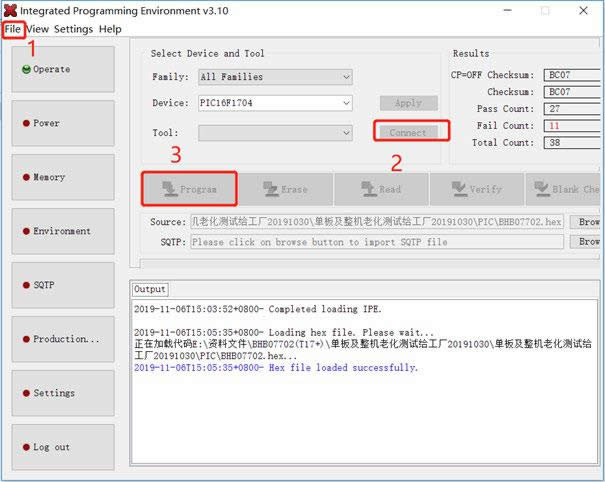
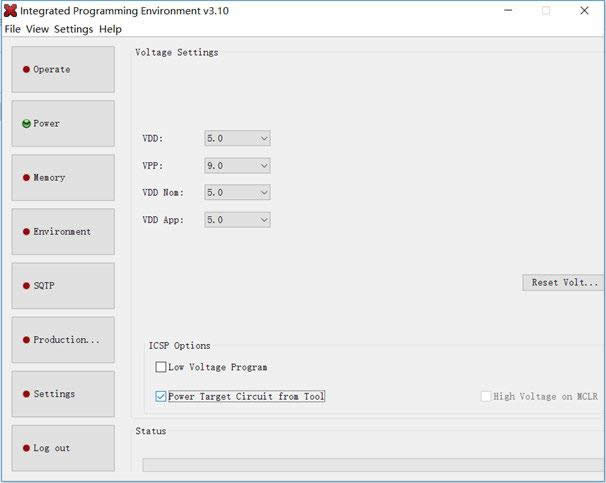
Figure 5-8
Step four: bank check the boost circuit output
Test D5 / D8 in chart 5-9 to measure 23-24.5V voltage.
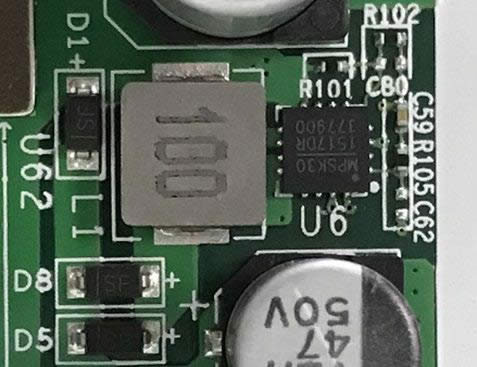
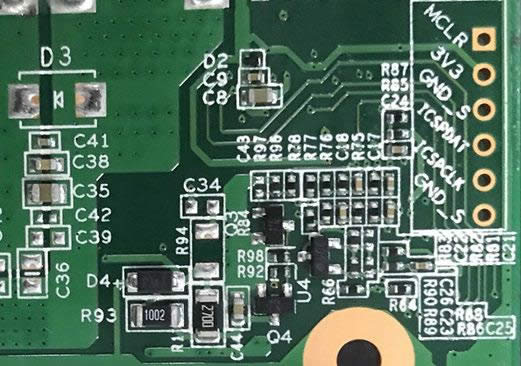
Effigy 5-9
Pace five: check the LDO 1.8V or PLL 0.8V output of each group
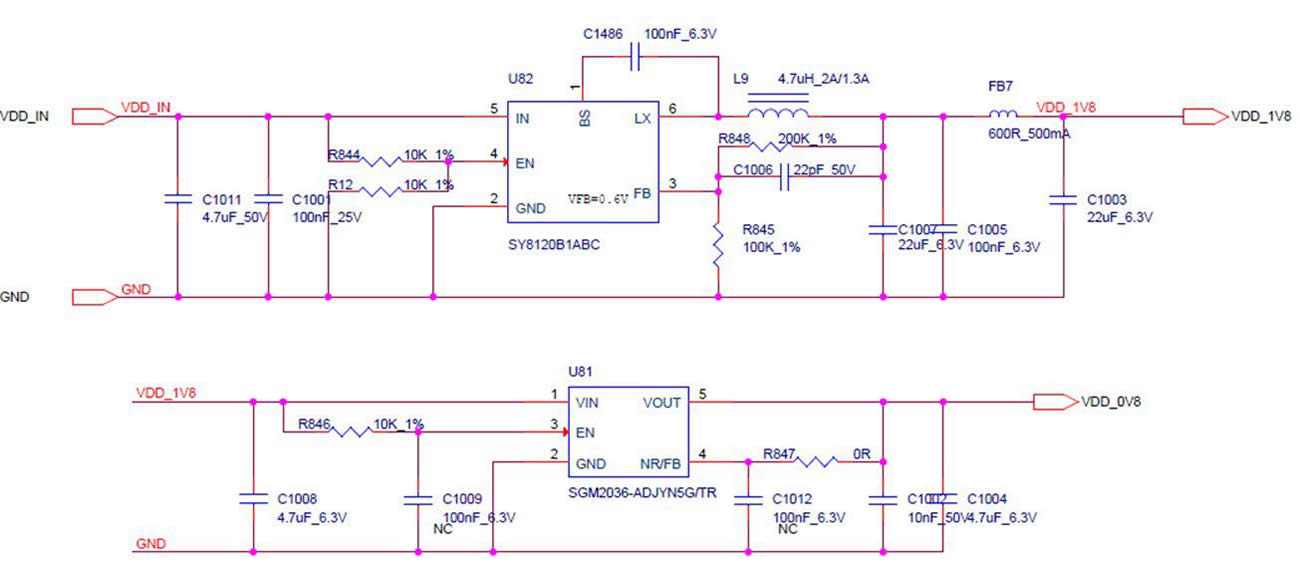
Figure 5-ten
Step half dozen: check the chip signal output (CLK / CI / RI / BO / RST)
Refer to the range of voltage values described by the signal direction. If the measurement encounters a big deviation in voltage value, it can be compared with the measured values of adjacent groups.
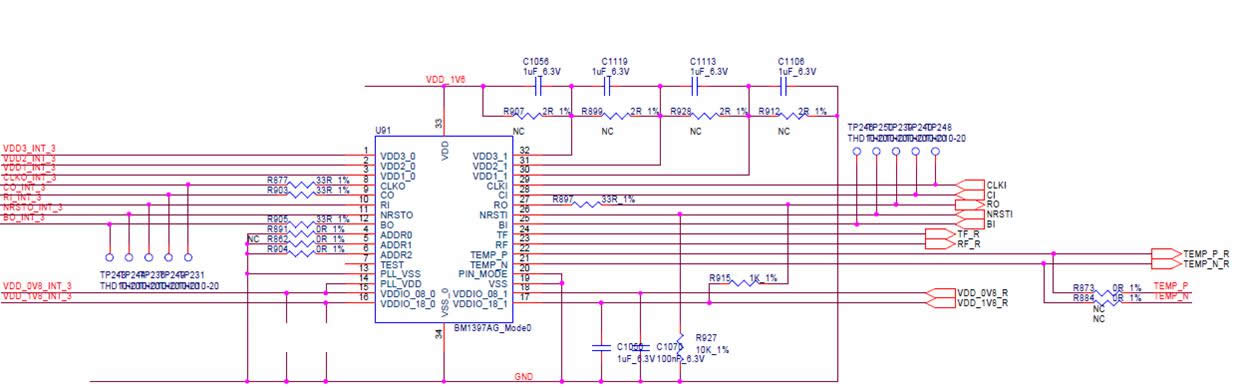
Effigy 5-11
Bold that the chip betoken pin output voltage is normal, if the chip is still incomplete, for example, if 64 chips are detected, you tin can troubleshoot past shorting RO pull-up resistor R639. If 64 chips can be detected afterward shorting, it indicate that chips 1-64 should be normal, and yous can troubleshoot the 65th chip at this time. If 63 chips are detected afterward curt-circuiting, conduct troubleshooting forward; it is recommended to adopt the dichotomy method for troubleshooting, that is, test from the middle (starting from the 32th).
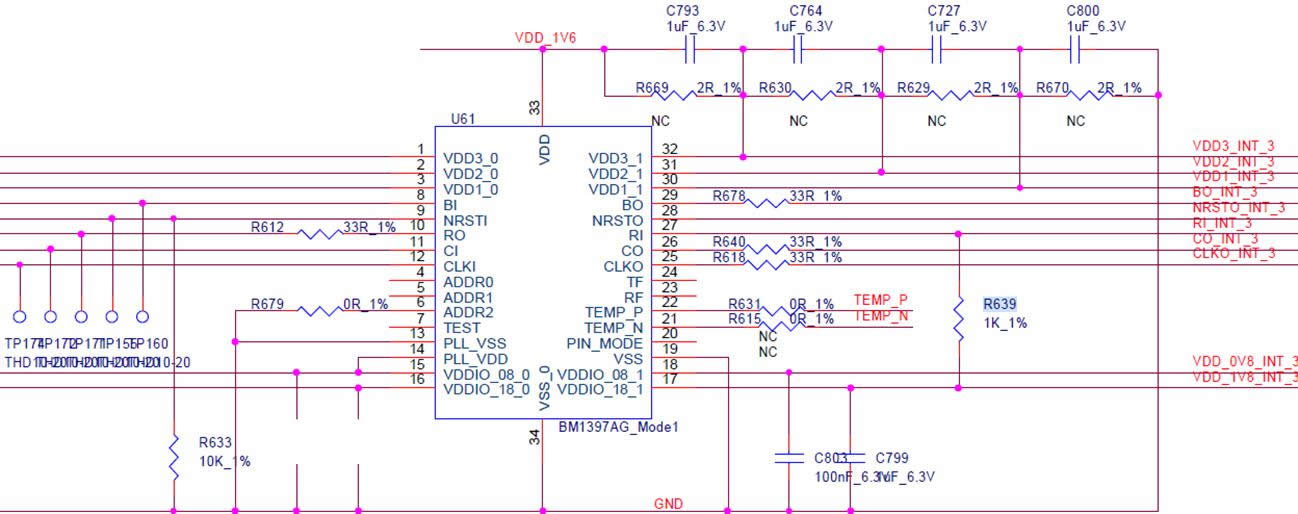
Figure five-12
Troubleshooting comparison table:
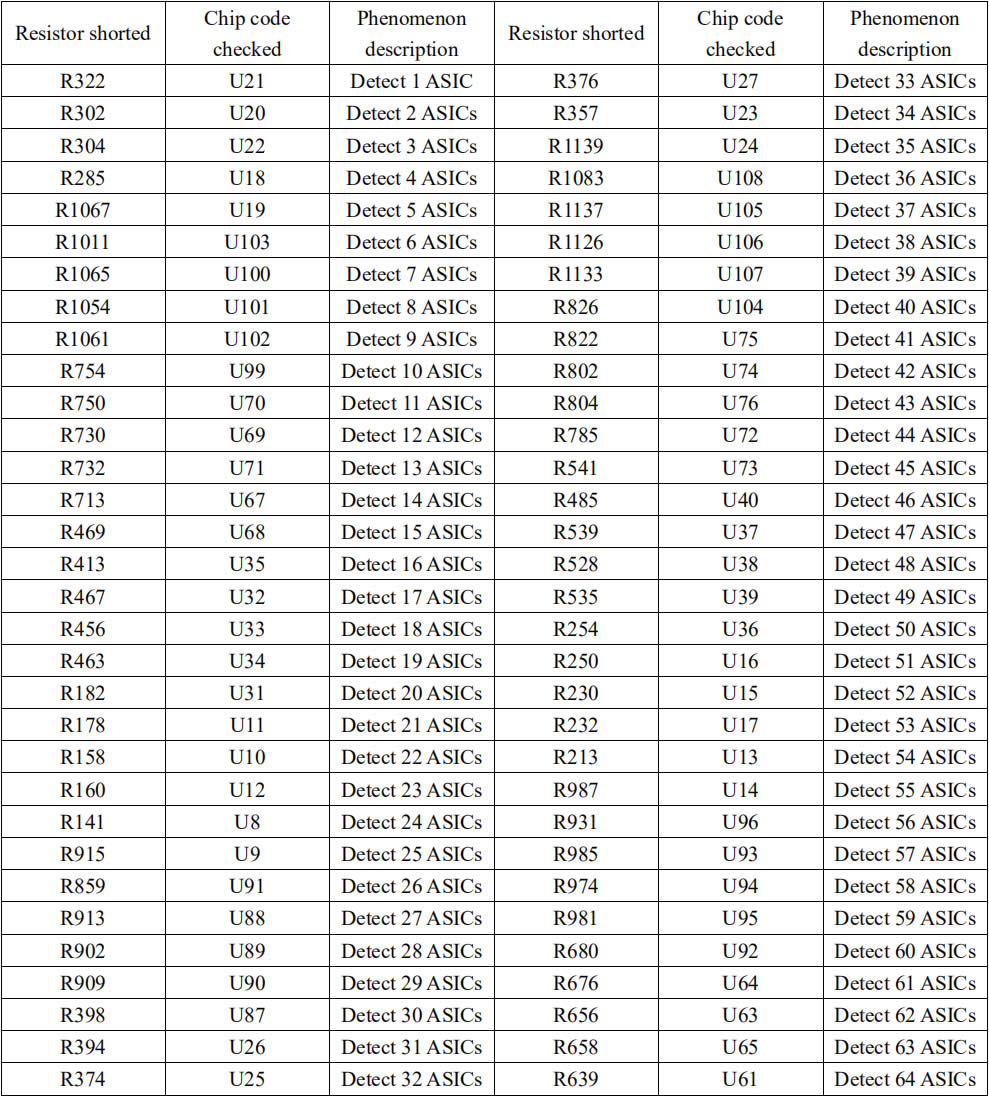
2. Miracle: Single board detection chip is incomplete (PT1 / PT2 station)
Check the relevant signals (CLK / CI / RI / BO / RST) of the chip in front of and behind the mistake position, locate the bad position co-ordinate to the IC with the aberrant signal measured, and refer to the betoken direction and voltage range for repair.
three. Phenomenon: single lath pattern NG, that is, the response nonce data is incomplete (PT2 station type)
The serial port is connected to the figurer, and the reckoner reads the test log; according to the results displayed in the log, the chip position of insufficient nonce information tin can be determined; supplant the flake at the corresponding position.
iv. Phenomenon: Exam temperature reading is abnormal (PT2 station)
Bank check the temperature-sensing power supply VDD and the connexion condition between the temperature-sensing and the chip (TEMP_P; TEMP_N), and check the soldering quality of the chip continued to the corresponding temperature-sensing.
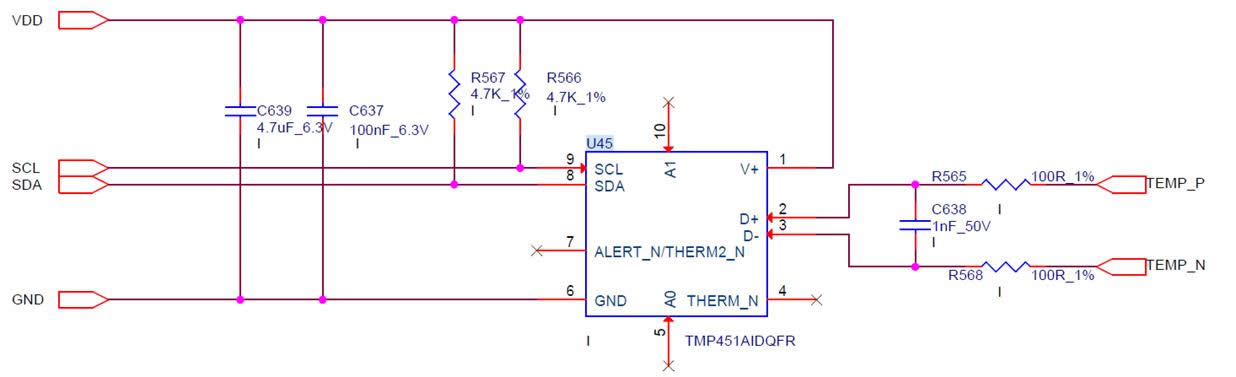
Figure 5-thirteen
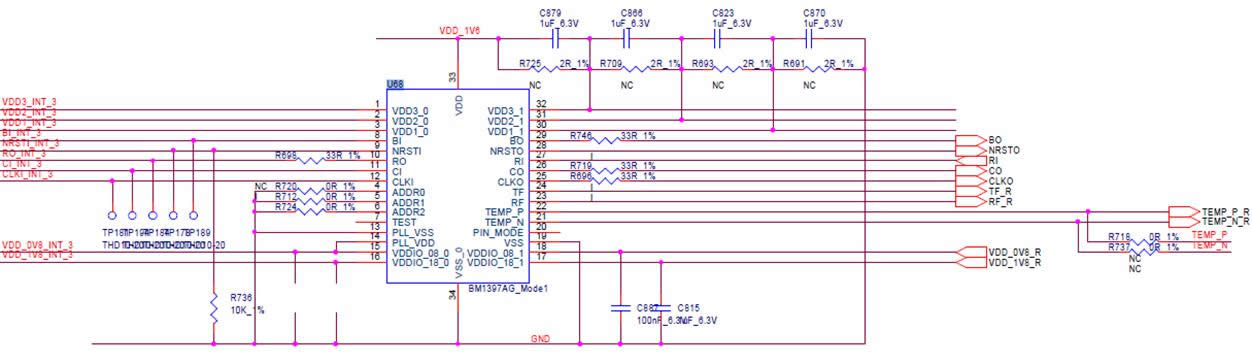
Figure 5-14
Check the quality of the front and back chip rut sinks continued to the temperature sensor. If the heat sink is not welded well, it will touch the temperature departure.
VI. Issues Caused past Control Lath Issues
one. The whole miner is not running
First stride: check whether the voltages at several voltage output points are normal. Yous can disconnect U8 first if 3.3V short circuit. If the curt circuit still exists, you tin unplug the CPU for measurement. For other voltage abnormalities, supercede the corresponding transformer IC in general.
Second step: if the voltage is normal, please bank check the welding status of DDR / CPU (X-RAY inspection on the production side).
Third stride: try to update the flash program with the SD card.
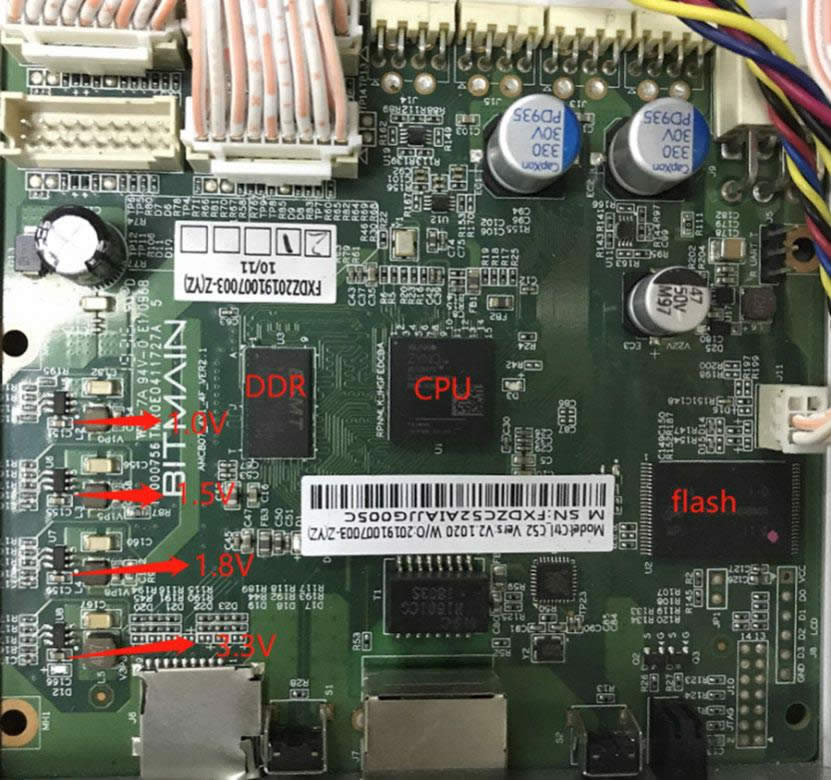
Effigy half dozen-one
2. The whole miner cannot detect the IP
Probably the IP is not found due to aberrant functioning. Refer to point ane for troubleshooting. Check the appearance and soldering of the network port, network transformer T1, and CPU.
3. The whole miner cannot be upgraded
Cheque the appearance and soldering of the network port, network transformer T1, and CPU.
4. The whole miner fails to read the hash board or has fewer chains
A. Check the cable connectedness
B. Bank check the parts of respective concatenation on the control board
C. Check the wave soldering quality of the pins and the resistance around the plug-in interface
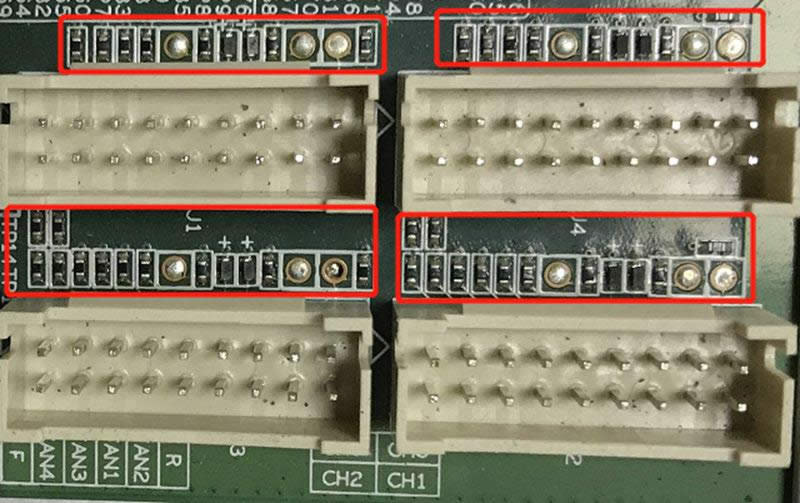
Effigy 6-2
VII. Whole Miner Problems
1. Initial test of the whole miner
With reference to the test process documents, the general problems are associates procedure issues and command board process problems.
Common phenomena: IP is not detected, the number of fans is aberrant, and the chain is abnormal.
2. The whole miner sweeping frequency band
Low hashrate caused by aging: Bank check the hashrate departure of the corresponding hashboard to run into if at that place is a large difference in hashrate, and have out the hashboard with a large hashrate deviation for test maintenance.
Bank check whether in that location'southward low boilerplate hashrate caused by the network interruption.
Large temperature difference caused by hashrate: cheque the aging environment; for the hashboard with high temperature, bank check the welding quality of the heat sink of the hashboard.
Aging miner protection: more often than not over-temperature protection is required, please command the aging environment temperature to be less than 40 degrees Celsius.
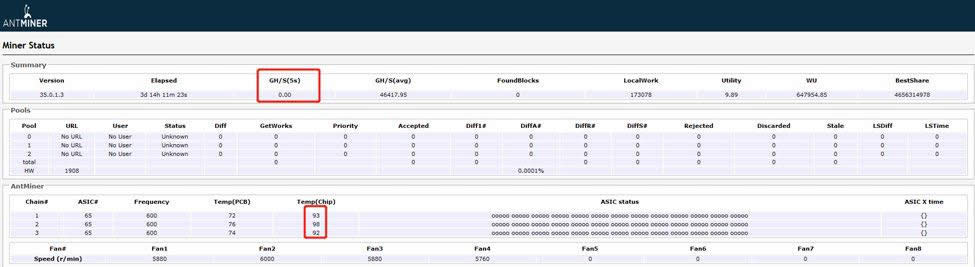
Figure 7-1
Less chain:
If one of the chains cannot be detected, detach the miner and test the corresponding hashboard; if information technology is determined that the hash board is faulty, repair the hash board; if information technology's determined that the control board is faulty, repair the command board.
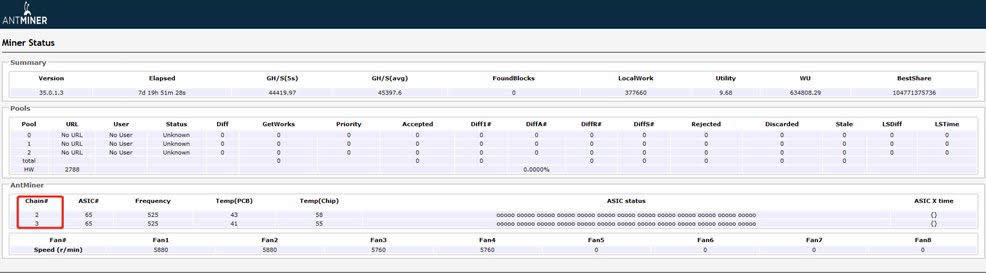
Figure 7-2
four. After-sales maintenance
Refer to the above troubleshooting steps for each station. For related test procedures and hash board testers, please communicate with the after-sales engineer for details. Afterward repair, please utilise non-scanning mode to test PT2.
VIII. Other Matters Needing Attention
Maintenance flowchart

• Routine test: starting time perform visual inspection on the hash board to exist repaired, detect whether the PCB is plain-featured or burnt. If yes, it must exist handled first; bank check whether there are whatever parts with obvious burn marks, collision start or missing parts, etc.; secondly, if no problem is found through visual inspection, the impedance of each voltage domain tin be tested outset to detect whether at that place is a short circuit or an open circuit. If yes, it must be handled first. Third, check whether the voltage of each domain is nigh one.5V.
• After the routine test is OK (in general, the short-circuit test is necessary for the routine test to preclude the chip or other materials from beingness burned due to short circuit when the ability is on), you can use the hash board tester to perform flake detection, and determine the positioning based on the hash lath tester test results.
• According to the display result of the test fixture examination, test the voltages of scrap test points (CO / NRST / RO / XIN / BI), VDD0V8 and VDD1V8, etc. starting from the vicinity of the faulty scrap.
• According to the signal direction (the RX point is passed in the reverse direction (from chip 65 to 1), and several signals CLK CO BO RST are transmitted in the forward direction (from chip one to 65), find the aberrant mistake signal through the ability supply sequence.
• When locating to the faulty chip, the scrap needs to be re-soldered. The method is to add a flux around the chip (preferably no-clean flux), and heat the solder joints of the flake pins to a dissolved status, so as to promote the chip pins and the pads to re-run, and so removing tin can finally, thus achieving the effect of re-tinning. If the failure is the aforementioned later on re-soldering, the chip shall be replaced direct.
• The repaired hash board can be adamant to be a expert product if it passes the fixture tests for more than twice. For the showtime time, after the replacement of the accessories is consummate, look for the hash board to cool down and perform fixture test, after passing, set it aside and then cool information technology down; for the 2nd time, look for a few minutes until the hash board is completely cooled before testing.
• Afterward the board is repaired, relevant maintenance / analysis records (requirements for maintenance reports: date, SN, PCB version, tag number, bad crusade, bad liability attribution, etc.) should be prepared for feedback to production, later-sales, enquiry and development departments.
• After the record is prepared, install the unabridged miner for conventional aging.
• Good products repaired at the product end should flow production from the start station of product (at to the lowest degree carry the appearance inspection and start from the PT1 / PT2 test station)

Source: https://www.zeusbtc.com/manuals/Antminer-S17-plus-Hash-Board-Repair-Guide.asp
Posted by: reedfreyed.blogspot.com
0 Response to "How To Solder Circuit Board Repair"
Post a Comment